Email Marketing and customer journey
Strategy and Optimization for Your Email Marketing
It might not just be for businesses, but for all the people who want to take the attention of their audience and encourage them to take action.
Email Marketing and customer journey
During the customer journey, email marketing can play a key role in influencing them.
But what is the “customer journey”?
The customer journey refers to the entire lifecycle of a customer’s interaction with a brand, encompassing all the stages from initial awareness to post-purchase engagement and advocacy. It represents the sum of experiences and touchpoints a customer encounters while interacting with a company, whether before, during, or after using its products or services.
When customers want to take an action that you desire, something should happen, a trigger that encourages them. During this process, customers might get distracted or disappointed so it is your time to send them the right message at the right time. Whether it is a desired interaction for you or not you can send a suitable email. For example, if they sign up for a meeting you can send an email to thank them and add a discount for the next appointment. On the other hand, if they cancel the meeting you can send an email containing alternative timing to help them go forward in the process. That is why you have to consider all the touchpoints and tailor your email based on them.
It is also important to consider your customer personas and customize your message accordingly. Whether you work with individual customers (B2C) or offer goods or services for other businesses (B2C), it is essential to tailor your email content for each group.
At the end of day, it is a happy customer that can be the advocator of your brand and they can become your most successful sales team.
Email Marketing Calendar
To be ensure that your are on the right track and aligned with the bigger picture of your marketing strategy, it is important that you create an email marketing calendar. It is a part of the whole marketing calendar.
An email marketing calendar is a structured plan that maps out the timing, content, target audience, and goals for email campaigns over a set period, like a month or a year. It serves as a tool to maintain consistent communication with your audience, ensuring emails are aligned with broader marketing strategies and delivered on time. A detailed calendar might include newsletters, promotions, follow-ups, or seasonal messages, as well as additional elements like campaign tasks, attachments, and tracking metrics. By using an email marketing calendar, businesses can optimize planning, allocate resources effectively, and track campaign progress to stay on top of their marketing goals.
Like all the other processes, reviewing and auditing the email marketing calendar is essential. First, you create the content, then you share it and the next step is to measure how effective the email is. Here is the time that you have to analyse the result and make adjustments to get the most engagement. So it is important to constantly evaluate and make necessary changes.
Optimize audience engagement
People who subscribe for you email list, don’t usually subscribe to hear about you, it is all about them. So The content you send them in the email is realy important. You need to think about how you can grab their attention and make them interested in engagement with your email.
There is some top content that makes receivers open your emails.
- Promotional offers and discounts
- New products from loved brand
- Newsletter that are anticipated
- promotional offers or sales from new brands
- Content that feels created for you
Customers also stated that they like to receive emails containing the below list:
- Discount code
- Exclusive sales
- New product announcement
- Content-specific to their interest
- Behind the sense of information
It shows that they are eager to receive what benefit them, the content which is more personal and content that strengthens the sense of bonding with the brand.
Using tempting words in the subject, such as “exclusive” can really encourage customers to engage. Using great photos and design gives them a sense of happiness and joy instead of looking at an email full of text about the company. Also using storytelling helps customers to feel a strong connection and enjoy being involved.
Your social media is another channel that can help you increase engagement. While adding your social media channel links to your emails is important, you can also encourage your audience with your social media posts to sign up for an email list to get more customized offers.
Start with the data
Optimization and getting the best result is the goal of email marketing. To get to that goal, it is important that you first take a good deep look at your data first, analyse them and finally act accordingly.
For analysing data, There are some metrics and factors which are important to consider. Previously “open rate” was the most important factors, however recently due to some changes, there are other metrics that matters. Here, four of the most useful ones are introduced.
- click rate
It is the percentage of recipients who clicked on at least one link in your email. A high click rate indicates strong engagement and interest in your content. You can use it to assess how compelling your email copy, design, and call-to-action (CTA) are.
- read time
It refers to the amount of time a recipient spends actively reading an email. It’s a metric that indicates how engaging and relevant the content is to the reader. Longer read times suggest that recipients are interested and engaged with your email’s content, while shorter read times may imply that the email is being skimmed or ignored. Read time can help you assess whether your email is compelling enough to encourage your audience to spend time on it. If read time is low, you might want to reconsider your subject lines, content quality, or call-to-action (CTA) placement.
- unsubscribe rate
A high unsubscribe rate often indicates that your email content isn’t aligned with the recipient’s expectations or interests. It could mean that the frequency of emails is too high or that the content is irrelevant. A high unsubscribe rate could signal that you need to better segment your audience or provide more personalized content.
4 .conversion rate
It refers to the percentage of recipients who take a desired action after receiving an email, such as making a purchase, signing up for a service, downloading a resource, or clicking a link. This metric helps determine how effective an email campaign is at motivating recipients to complete the goal you’ve set. A high conversion rate means that your email content, design, and call-to-action (CTA) are engaging and compelling enough to drive recipients to act. It shows that your email was successful in pushing subscribers towards the intended goal.
Optimize All types of Emails
There are various types of email in an Email marketing Strategy and it is important to optimize them according to the purpose of that email type.
Welcome and onboarding emails
It is the first email that you send to your subscribers after they sign up for the email list. It can help you to know if they bother to open this email and the next ones or not.
The most important point to remember is the “why”, not only for the subscribers but also for you. It is essential that you and the subscribers fully know what is the purpose of being on the list and what is the content that you will send to them. It is important to know what is the desired next step that you want the subscribers to take. These emails have a high opening rate as well. Usually, there is not just one email, but there is not a perfect and fixed number and it depends on your strategy and goal.
For these email the very first step is to decide the key message of the email/emails. The number and timing is the second step to consider. Then you have all the requirements, and now it is the time for create, setup, and send the emails. And as always, analysis of the result is essential.
Digital nudge with email
All of us make lots of decisions in life, big or small. Nudge marketing is how marketers try to facilitate quick decision-making. Email is perfect for nudge marketing. It can engage your subscribers, encourage them, and ultimately increase conversions and build trust.
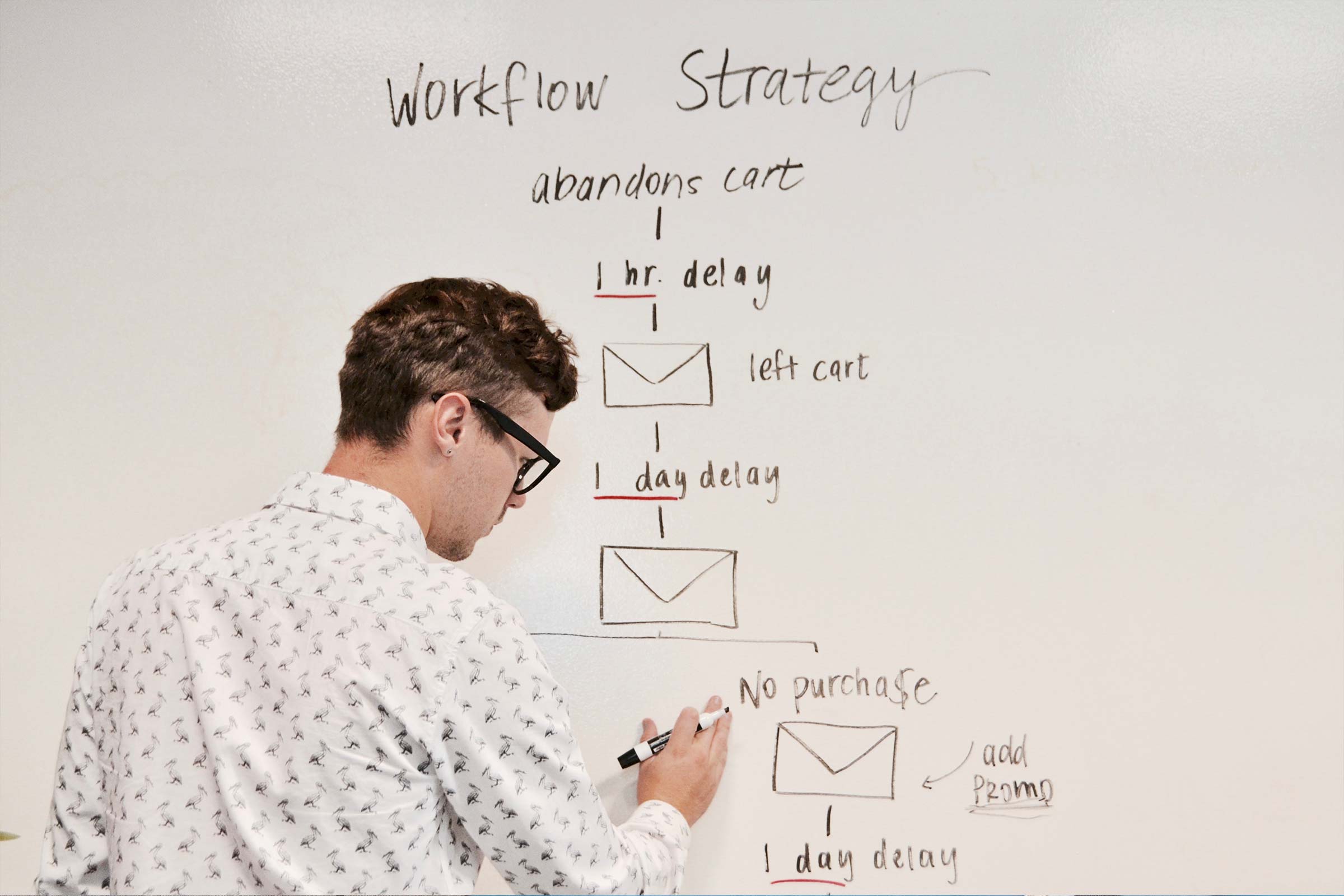
The abandoned cart email is one of the most familiar type of nudging with email. High percentage of potential buyer add items to the cart and then abandon it, so here is a chance for you to send them the email to encourage them to finish their purchase. You have to be careful about the tone of your email, make it helpful, not annoying.
Another example is the emails which show the scarcity and limitations of a purchase. You can send your offer about one or more products and emphasize the limited number of products left, or the limited time customers can use the discount. It would trigger a sense of need for customers to buy quickly.
For this type of email what makes them unique is creativity. Try to offer something special curated for each customer, something that makes them feel great about themselves. Incorporating a human-centered approach into your email marketing strategy will help them appreciate your brand and stay interested, even delighted.
Optimize email content
Enrich your email copy
We always hear that the content is the king. It is absolutely important to have a good copy to increase audience engagement. To get the most out of your email marketing, you have to put effort on optimizing the content in your emails.
Here we divided this task into several steps:
Step one
The tone of your brand. You definitely have various channels to communicate with your audience, website, social media, and email, …. It is important to keep our overall tone the same across all channels. You have to have your unique tone where the audience quickly can feel it as a familiar desirable message.
Step two
Make it like a conversation. Although email is a one-way message that you want to send it to your audience, think about how the other side receives it. Think if you are in a conversation with your customers at a social event and make the message more like it. Write to your audience as if you are talking to them.
Step three
Break up the pieces. To make the email more interesting for the reader try to avoid a big text. It is important to separate the different parts according to its purpose. Then add a suitable headline for each piece to help readers navigate easily and pick the piece that is related to them the most.
Step four
Edit, Edit and Edit. the last task to do is review and edit. While editing make sure the pieces work best together, you have good headlines, your brand’s tone is kept and proof read the whole text.
In short, pay attention to the list below to have a good copy:
- Concise sentences and brief paragraphs
- Organize content using a structured hierarchy
- Break up the copy
- One purpose per paragraph
Writing great email subject line
Think about the number of emails you receive in your mailbox. How many of them do you open? What makes you open them? Subjectline!
The subject line is a very small but important part of each email. It is what makes the receivers open an email and want to read it.
To make the subject line more appealing to receivers, think about these:
- Personalize. Personalization is not just about the name of receivers, but more detail according to their need. People want to be seen and recognized but not used. For example, when they see their names and the product that were looking for recently, the open rate will increase.
- Offer to solve a problem. Introduce a common problem and offer them a solution that you can provide them. They like to feel supported.
- Create a sense of urgency. Incorporate scarcity and relevance in time to prompt immediate action. But Don’t do it too often, only when the occasion genuinely calls for action and only when it’s useful to your readers.
- Spark their curiosity. Make receivers curious about what is inside the email. It is important that the receiver can find the answer quickly. Don’t make them irritated by forcing them to read the email to the end.
- Be relevant and timely. Link the subject line to current trends, seasons, or events to increase resonance.
The art and science behind the email images
While content is the king, design is the queen! We can not imagine an email with a long text get success in grabbing receiver’s attention. An email without a good design might fail and images are the most important factor of having a good design.
Why images are important?
- Visual content strengthens your message
- Images are a quick read
- A variety of images is engaging
- Images increase click-through rates
Be careful about using one big image for your email. Try to use more than one image, because some email services don’t support this big background image, also it might be at risk of being recognized as spam.
There is not a single answer to the question “What is the best image-text ratio”. It is your task to try and test different ratios to reach the best combination.
To ensure impactful email marketing, selecting the appropriate image file size and format is critical. JPEGs work best for photos due to their smaller size and quick download speed, PNGs are ideal for crisp graphics and logos with transparency, and GIFs add interactivity with animations. Balancing quality and file size ensures faster email load times and better engagement.
For the best results, reduce file sizes without compromising quality, use alt text for accessibility, and test images across devices to match your audience’s preferences. High-resolution images can be easily resized for quality retention, while GIFs increase interactivity, making your emails more dynamic. Thoughtfully designed visuals, optimized for speed and compatibility, enhance the overall user experience and contribute significantly to email marketing success.
Powerful Call To Action
By a great subject line you made your audience to open the email, now it is the time to encourage them to do your desired action. Call to Action (CTA) is a clear and compelling prompt that encourages recipients to take a specific action, such as clicking a link, making a purchase, or signing up for a service. It is typically presented as a button or link with action-oriented text like “Shop Now” or “Learn More,” designed to guide users toward your marketing goal.
The purpose of Call to Action is to make people stop what they are doing and instead do what you want from them. That is why you need to give them a good reason for doing so. People don’t like to be deceived so give them a clear promise. Make sure you tell them what to expect.
To have a good tempting CTA,
- Use first-person copy
- Be short
- Add urgency
And as always, try and test different CTA to find the best that works for you. It is also important to review and customize you CTA according to content, trends, and your audience.
Email Footer
Email Footer is also one of the important and necessary sections of your email. An email footer is a section at the bottom of an email containing essential details like contact information, company address, legal disclaimers, and social media links. Positioned after all body content, including the email signature, it reinforces professionalism and supports branding. Email footers can range from basic elements, like an unsubscribe link, to more detailed content that adds value for recipients, such as useful resources or links. By designing this section in the best way, you can enhance your credibility and strengthen your connection with the audience.
To comply with laws like the CAN-SPAM Act and GDPR, always include the following in your email footer: your company’s physical or mailing address, an unsubscribe link or a way for recipients to update email preferences, and, if possible, links to your privacy policy and terms of use. Industry-specific regulations may also require legal information, which is best placed in the footer for clarity and compliance. This ensures your emails respect consumer rights while maintaining professionalism.
Personalize your email content
Personalizing marketing content has become essential, as customers expect tailored experiences that resonate with their needs. Thoughtful personalization, like dynamic content in email templates or product recommendations, engages audiences without feeling intrusive. Avoid excessive data usage to maintain trust and authenticity. Strategies such as seasonal campaigns, back-in-stock alerts, and embedding reviews can elevate engagement. Moving beyond basic triggers like birthdays, focus on creating helpful and relevant content. Effective personalization fosters deeper connections and encourages customer loyalty.
Optimize Audience
Optimizing Email Timing for Maximum Engagement
Timing is critical in email marketing, but the focus should be on when your audience is most likely to engage rather than a universal “best time.” Research suggests Tuesdays to Thursdays are ideal for sending emails, as recipients might be more free than on Mondays or Fridays. For optimal engagement, emails sent at 10:00 AM or between 5:00 PM and 7:00 PM in the recipient’s time zone often perform well. However, audience-specific factors, such as demographics or time zones, can influence these patterns.
To refine timing, use audience data and analytics provided by email platforms. Some Tools can automate optimization based on behavioral insights, ensuring emails reach recipients at their most responsive moments. Continually reviewing and adjusting your campaign timing based on open and read rates is essential for maximizing effectiveness.
Building a Successful Email Segmentation Strategy
When building an email segmentation strategy, the first step is ensuring you have permission to send emails. Avoid using purchased lists, as they often lead to spam and legal issues. A well-organized database is crucial, as it forms the foundation of successful segmentation. You’ll need to collect both explicit data (information directly provided by users) and implicit data (behavioral insights such as email and web interactions) to tailor your content effectively.
Segmentation allows you to send highly relevant, personalized emails to specific audience groups, increasing engagement. By combining explicit and implicit data, you can create complex, multi-layered segments that lead to more effective, helpful, and contextual email campaigns. This approach leads to fewer unsubscribes and higher click rates, making it essential for driving success in your email marketing efforts.
How to Handle Unsubscribes Strategically
Unsubscribes are a natural part of email marketing, and while it may feel disappointing, they aren’t always negative. A subscriber who opts out can be more valuable than one who remains disengaged. Some brands make it difficult to unsubscribe, but this can backfire, leading to spam reports and damaging the health of your email list.
To handle unsubscribes gracefully, make it easy for recipients to opt-out and consider offering them an option to adjust their preferences. Providing alternative ways for them to stay in touch, like social media or text messages, helps maintain a positive relationship. Occasionally sending re-engagement emails can also encourage inactive contacts to rejoin your list. Treating unsubscribes with respect can keep the door open for future engagement.
Monitor Audience Data
To optimize your email marketing strategy, it’s essential to regularly monitor your audience data. Instead of evaluating individual campaigns, take a broad approach to assess long-term trends. Focusing on engagement rather than vanity metrics like open rates will help you deliver more relevant content to your subscribers and maintain a healthy email list.
Key metrics to track include open rates (ideally 20-40%), click-through rates (5-15%), and conversion rates, which indicate the effectiveness of your calls to action. These metrics help gauge how well your content resonates with your audience and whether it’s driving desired actions.
Also, watch for unsubscribe rates and list growth to understand whether your content and frequency align with audience expectations. By analyzing these metrics collectively, you can ensure your email marketing strategy remains optimized for both business goals and subscriber engagement, ultimately building long-term relationships with your audience.
Recent Posts
The Best Guide to Social Media Marketing